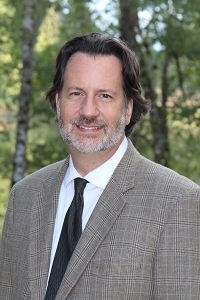
Thomas M. Tripp
Courses
| Course ID | Title | Meeting Time | Location | Semester | Syllabus |
|---|---|---|---|---|---|
| MgtOp 401 / PolS 442 | Leadership Skills for Managers | ||||
| MgtOp 485 | Negotiation Skills | M,W | VUCB 107 | Spring 2013 | |
| MgtOp 496 | Smart Decision Making: Intellectual Self-defense in a Quantitative World | ||||
| MgtOp 593 | Leadership and Productivity | ||||
| MgtOp 585 | Negotiation Skills |
Research
Organizational Justice
Workplace Conflict (including revenge and forgiveness)
Negotiations
Recent Publications
Gregoire, Y., Joireman, J., Devezer, B., & Tripp T.M. (in press). Can a firm get away with a double deviation? The role of firm motives in consumer revenge and reconciliation. Journal of Retailing.
Decoster, S., Camps, J., Stouten, J., Vandevyvere, L., & Tripp, T.M. (in press). Standing by your organization: The impact of organizational identification and abusive supervision on followers’ perceived cohesion and tendency to gossip. Journal of Business Ethics.
Cox, S., Bennett, R.J., Tripp, T.M. & Aquino, K. (2012). An empirical test of forgiveness and reconciliation motives' effects on employees' health and well-being. Journal of Occupational Health Psychology, 17, 330-340.
Bies, R.J., & Tripp, T.M. (2012). Negotiating the peace in the face of modern distrust: Dealing with anger and revenge in the 21st century workplace. In B.M. Goldman and D.L. Shapiro (Eds.), The Psychology of Negotiations in the 21st Century Workplace. New York: Rutledge.
Tripp, T.M. & Gregoire, Y. (2011). When Unhappy Customers Strike Back on the Internet. Sloan Management Review, 52, 37-44.
Gregoire, Y., Laufer, D., & Tripp T.M. (2010). A comprehensive model of customer direct and indirect revenge: understanding the effects of perceived greed and customer power. Journal of the Academy of Marketing Sciences, 38, . 738-758.
Tripp, T.M., & Bies, R.J. (2009). Getting even: The truth about workplace revenge – and how to stop it. San Francisco, CA: Jossey-Bass.
Gregoire, Y., Tripp T.M. & Legoux, R. (2009). Customer Revenge and Avoidance over Time: Insights about a Longitudinal “Love Becomes Hate” Effect. Journal of Marketing, 73, 18-32.
Stouten, J, & Tripp, T.M. (2009). "Forgiving Defection in Social Dilemmas: Should Leaders Ask for Forgiveness?" Leadership Quarterly, 20, 287-298.
Tripp, T.M., & Bies, R.J. (2009). “Righteous” anger and revenge in the workplace: The fantasies, the feuds, the forgiveness. In M.Potegal, G. Stemmler, & C. Spielberger (Eds.), Handbook of anger: Biological, psychological, and social processes. Amsterdam: Springer.
Tripp, T.M., Bies, R.J., & Aquino, K. (2007). A vigilante model of justice: revenge, reconciliation, forgiveness, and avoidance. Social Justice Research, 20, 10-34.
Tripp, T.M., & Bies, R.J. (2007). Scholarly biases in studying justice and emotion: If we don’t ask, we won’t see. In D. DeCremer (Ed.), Advances in the psychology of justice and affect. Greenwich, CT: Information Age Publishing.
Aquino, K., Tripp, T.M., Bies, R.J. (2006). Getting even or moving on? Power, procedural justice, and types of offense as predictors of revenge, forgiveness, reconciliation, and avoidance in organizations. Journal of Applied Psychology, 91, 653-658.
Education
- Ph.D. in Organization Behavior from the Kellogg School of Management, Northwestern University
- B.S. in Psychology from the University of Washington